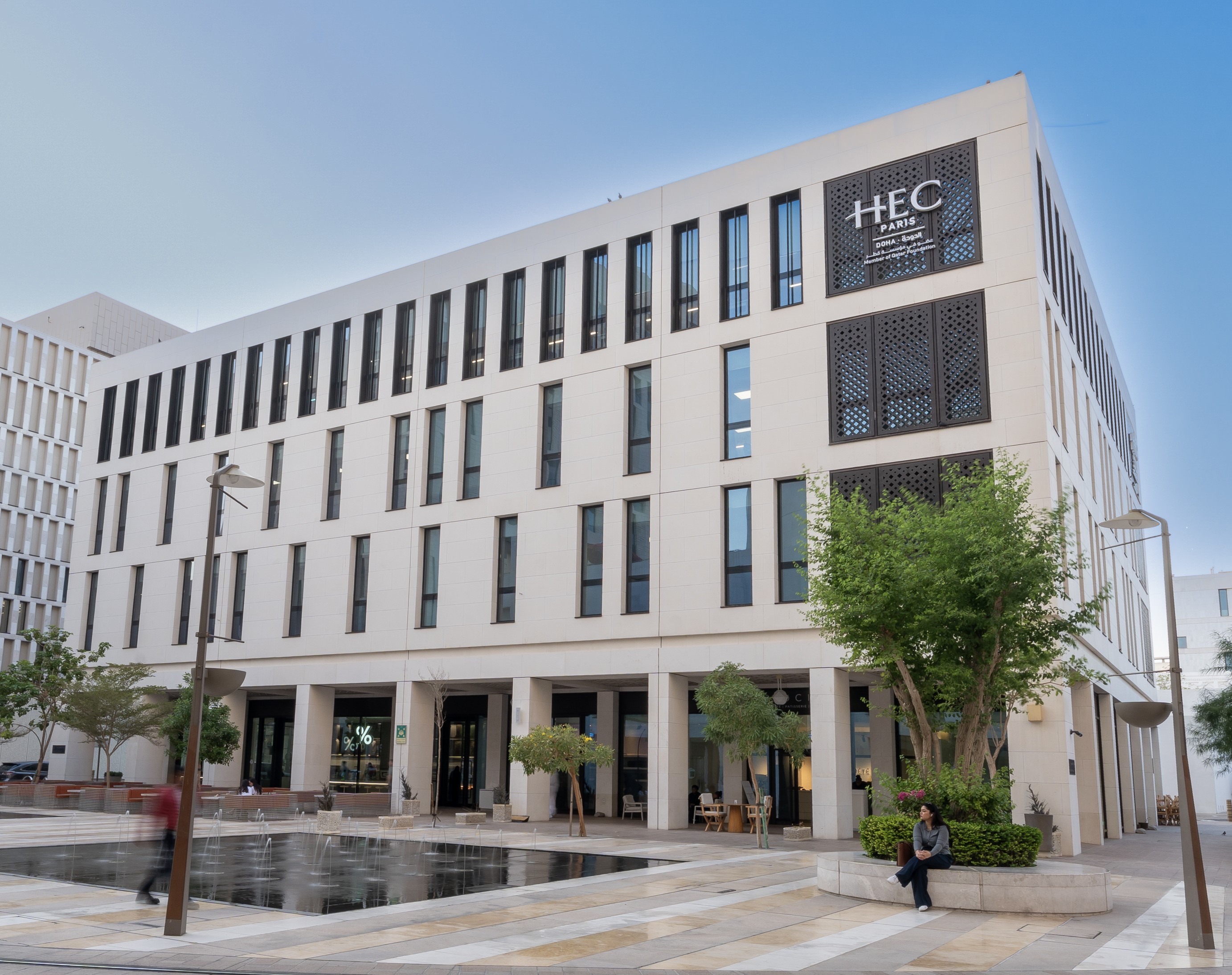
HEC Paris, Doha has hosted the first delivery in the Middle East of its Making Artificial Intelligence Real Specialization, one of nine specializations offered to our EMBA participants within the HEC Paris Executive MBA. Held in Doha from October 25 to 29, the five-day program brought together 25 participants from the Doha, Riyadh and Paris cohorts for an intensive learning experience combining academic insight, practical application and engagement with Qatar's technology and innovation ecosystem with Carnegie Mellon University in Qatar and Hamad Bin Khalifa University (HBKU).
As artificial intelligence (AI) reshapes industries and business models, organizations increasingly need leaders who can translate technological capabilities into meaningful business value. Moving beyond experimentation requires more than an understanding of emerging tools; it calls for the ability to identify opportunities, mobilize talent and integrate AI into organizational strategy. For organizations across the GCC, where digital transformation and economic diversification remain strategic priorities, the ability to translate AI potential into measurable business outcomes is becoming an increasingly important leadership capability.
Led by Peter Mathias Fischer, Associate Professor of Marketing at HEC Paris and Academic Director of the HEC MBA, and David Restrepo Amariles, Professor of AI in Regulated Markets at HEC Paris, the specialization explored the evolution of AI, from machine learning to generative and agentic AI. Participants examined the strategic foundations of successful AI adoption, including strategy, data, technology and skills, with a particular emphasis on the role of human capital in driving organizational transformation.
The program also marked the first collaboration with Carnegie Mellon University in Qatar, through a two-day component that introduced participants to large language models, generative and agentic AI, automation workflows and the development of AI-assisted applications. The wider program combined classroom learning with hands-on workshops, during which participants developed AI concepts and explored their practical applications. The experience culminated in project presentations and feedback from university faculty.
Participants also engaged with Qatar's wider technology and innovation ecosystem through visits to the Ministry of Communications and Information Technology, Msheireb Smart City and Hamad Bin Khalifa University. These engagements provided insights into AI readiness, smart city operations, emerging technologies and the role of research in supporting innovation. By connecting academic learning with local institutional and industry perspectives, the experience enabled participants to examine how AI is being developed and applied within Qatar's evolving innovation landscape.
The final day featured a venture capital panel with Dr. AlHasan Alsammarrai, Founding and Managing Partner of Applab, and Sharifa Albarami, technology entrepreneur, investor and digital transformation leader. The discussion explored investment opportunities in AI, the development of viable business models and the factors that enable technology ventures to grow and compete.
Peter Mathias Fischer said: “The challenge facing leaders today is no longer simply understanding that AI matters. It is knowing where it can genuinely create value, how it should connect to business strategy, and how organizations can develop the skills and structures required to implement it successfully. Making AI real means moving beyond experimentation and ensuring technology serves a clear strategic purpose.”
David Restrepo Amariles added: “Effective AI leadership requires executives to understand not only what the technology can do, but also its limitations, risks and wider organizational implications. By combining strategic thinking with direct development, participants examined AI from the perspective of decisionmaker and creator, which is increasingly important as these technologies become embedded across organizations.”
The Doha session concluded with participants presenting their Making AI Real projects, demonstrating how strategic thinking and technical understanding can be translated into practical applications aligned with organizational priorities. The projects reflected a central objective of the specialization: enabling executives to move from understanding emerging technologies to identifying where and how they can generate value within their organizations.
The specialization will continue with a second session in China from April 25 to 30, 2027, exploring AI performance measurement, stakeholder engagement, human-machine interaction, ethics and regulation.
Through this two-session learning experience, HEC Paris reinforces its commitment to developing leaders who can navigate technological change and translate innovation into organizational value. For HEC Paris, Doha, hosting the first Middle East delivery represents an opportunity to connect global academic expertise with the region evolving business and technology landscape. It also reflects the value of collaboration within Qatar Foundation, particularly through connections with fellow Education City institutions, including Carnegie Mellon University in Qatar and Hamad Bin Khalifa University. By fostering collaboration and knowledge exchange across these institutions, and bringing together participants from different markets, academic perspectives and industry contexts, the specialization contributes to the development of executive capabilities needed to lead AI adoption, support economic diversification and drive sustainable business growth across the region.